Ocracoke Attractions
Most of Ocracoke Island’s attractions are of the best variety: free! Or at least they’re very inexpensive.
Ocracoke’s attractions are simple and unfettered, with few of the usual commercial trappings of a tourist site. There are no go-cart tracks, mini-golf courses, waterslides or movie theaters. On Ocracoke, the island itself is an attraction. When people are here, they just don’t need as much stimulation. Quiet walks on the beach (Cape Hatteras National Seashore), fishing and clamming, looking for shells, building a sandcastle, strolling around the village, sitting on the porch swing, observing nature or chasing ghost crabs in the moonlight: These are the simple attractions on Ocracoke Island. For a little extra entertainment, bike over to the Ocracoke Lighthouse (the oldest in North Carolina and still operating) and the Preservation Museum, or go out and visit the ponies and take a little hike. You get the idea.
For a little help with your exploration of Ocracoke Island’s attractions and history, pick up a copy of the Ocracoke Self-Guided Walking Tour Book. Enjoy the history, culture and attractions of the island as you explore the different sections of the village. You can buy the book online here; see the link to the right.
Beach on Ocracoke Island
- Ocracoke
Ocracoke’s beach has attracted increasing national attention as it worked its way up Dr. Beach’s much ballyhooed list of “Best Beaches.” In 2007 we finally reached the summit and became America’s #1 Beach! The wide sandy beach is clean, and there are plenty of spots where, with a little effort, you can enjoy it undisturbed by others. The ocean reaches high temperatures of 85 F in the summer and can adopt the clear aquamarine hues of tropical waters when the conditions are right. Board sports, surf fishing, swimming, shelling, reading and napping are all popular beach pastimes. The 16 miles of oceanfront beach are part of the Cape Hatteras National Seashore and are free of development.
There are nine on and off ramps between the beach and N.C. Highway 12, five of which provide four-wheel-drive access. The southern and northern ends of the beach, the areas most popular with surf fishermen, are open year-round to four-wheel-drive vehicles. The section of the beach between Ramp 70, by the airport, and Ramp 59, at the Hatteras ferry, is closed to vehicle traffic seasonally and has plenty of good spots for families with children and those looking for more solitude. Several threatened and endangered species, such as the piping plover and several species of sea turtles, nest on the island’s beaches, and sections may be closed to the public in order to protect these nests. You will see NPS signs posting hours of access and closures at entry ramps where there are endangered species breeding and nesting. Be sure to pay close attention to the rules as there are stiff penalties for intrusions into protected areas.
Lifeguards are on duty at the most popular, though by no means overcrowded, beach from Memorial Day through Labor Day. The lifeguard beach is on the right about 1 1/2 miles north of the village and is identifiable by a small brown swimmer sign and its large parking lot. There are restrooms, changing rooms and a shower facility here as well.
Blackbeard Museum at Teach’s Hole
- 935 Irvin Garrish Highway
- Ocracoke
- (252) 928-1718
Since 1992 this shop and pirate exhibit has delighted visitors of all ages. The life-like re-creation of Blackbeard is a highlight of a museum also featuring weapons, old bottles, original art, pirate flags and a hand-crafted models of Blackbeard’s ships, Queen Anne’s Revenge and Adventure. Take time to browse the exhibit, enjoy the history and shop for a pirate souvenir to take back home.
Located on Irving Garrish Highway across from the Variety Store, there is a large parking area. Teaches Hole is open daily, Memorial Day through Labor Day, and is closed on Sundays March through May and September through November.
British Cemetery
- 220 British Cemetery Road
- Ocracoke
On May 11, 1942, about 40 miles south of Ocracoke, a German submarine torpedoed and sank the British vessel HMS Bedfordshire. The 170-foot ship was one of 24 antisubmarine ships loaned to the United States by Winston Churchill. The entire crew of four officers and 33 crewmen drowned. U.S. Coast Guard officers found four of the bodies washed ashore three days later. The soldiers were buried on a plot of land next to a family’s cemetery on land donated to Britain. The Coast Guard still maintains the grave sites and flies a British flag over the graves. Every year on the anniversary of the sailors’ deaths, there is a ceremony to honor the British sailors. The adjacent village cemetery also provides an interesting look back into Ocracoke Island’s past.
Deepwater Theater
- School Road
- Ocracoke
- (252) 928-7580, 928-4280
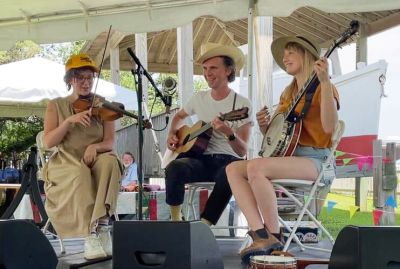
Deepwater Theater is the home theater of Molasses Creek, Ocracoke Island’s hometown band that’s built a loyal following with its blend of soulful singing, bluegrass fiddlin’ and occasionally skewed sense of humor. From June through August, Molasses Creek plays here on Thursday evenings. On Wednesday evenings the Ocrafolk Opry takes over, featuring a panoply of local musicians and special visiting guests. The door opens at 7:30 and shows begin at 8:00 p.m. Ticket prices are around $15 for adults and $7 for children.
Newly added in 2006 was the Rumgagger Pirate show, featuring tall tales and songs of the sea on Tuesdays at Deepwater Theater.
Hammock Hills Nature Trail
- Irvin Garrish Hwy.
- Ocracoke
Just across from the National Park Service’s Ocracoke Campground, the Hammock Hills Nature Trail is a 3/4-mile trail through the island’s maritime forest and salt marsh. It’s a great trail for nature lovers and bird watchers, and there are informative signposts along the way. The hike takes about 30 minutes.
Hammock Hills Nature Trail
- 4281 Irvin Garrish Highway
- Ocracoke
Just across from the National Park Service’s Ocracoke Campground, the Hammock Hills Nature Trail is a 3/4-mile trail through the island’s maritime forest and salt marsh. It’s a great trail for nature lovers and bird watchers, and there are informative signposts along the way. The hike takes about 30 minutes.
Historic Marker of Fort Ocracoke
- 38 Irvin Garrish Highway, behind the NPS Visitor Center
- Ocracoke
This marker is a little hard to find, but it’s worth seeking out. It’s on a grassy patch behind the National Park Service Visitor Center and next to the boat ramp. Park the car and walk out to the sound and you’ll see it. The marker commemorates Fort Ocracoke, the remnants of which lie submerged in Ocracoke Inlet toward Portsmouth Island. The fort was constructed by volunteers beginning on May 20, 1861, the day North Carolina seceded from the Union to join the Confederacy. One side of the marker lists all the men from Ocracoke and Portsmouth islands who were killed in the Civil War.
National Park Service Ocracoke Island Visitor Center
- 38 Irvin Garrish Highway
- Ocracoke
- (252) 928-4531
The majority of land on Ocracoke is part of the Cape Hatteras National Seashore and is publicly owned and administered by the National Park Service. The NPS Visitor Center, located at the southernmost end of N.C. Highway 12 near the Cedar Island and Swan Quarter ferry docks, is a clearinghouse for all types of island and national seashore information. You’ll find an information desk, helpful staff, a bookshop, free maps, informational brochures and exhibits about the island. From Memorial Day through Labor Day three or four ranger-led programs are offered daily. The visitor center is open year-round.
Ocracoke Lighthouse
- 360 Lighthouse Road
- Ocracoke
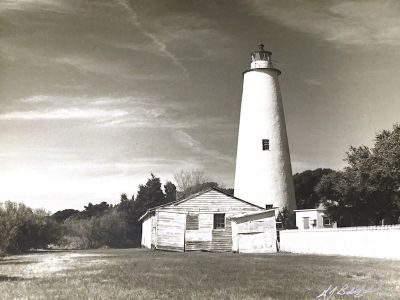
Ocracoke Lighthouse may be the shortest of the four Outer Banks lighthouses but that only makes it all the more charming. About 70 feet tall, the whitewashed tower sits on a lawn of flawless green surrounded by a white picket fence, outbuildings and a quaint keeper’s cottage, creating a picturesque scene of old island life. Built in 1823, this is the oldest lighthouse in North Carolina and the second-oldest in the nation. It is still in operation, and its beam can be seen 14 miles out to sea. During the summer season, docents are often on hand to answer questions and offer tours of the lighthouse, though climbing is not permitted.
Ocracoke Ponies and Pen
- 7669 Irvin Garrish Highway
- Ocracoke
There are many theories about how ponies found their way to Ocracoke Island. Some say they arrived on English ships during 16th-century exploration, others say they were victims of Spanish shipwrecks and some say they were simply livestock for the locals. However they got here, the ponies roamed the island freely for at least two centuries and were very much a part of the island lifestyle in days gone by. The local Boy Scouts even rode them, making them the only mounted troop in the country.
When N.C. Highway 12 was paved in 1957, cars and ponies began to collide. The National Park Service wanted to get rid of the entire herd, but the islanders protested and the Park Service agreed to contain some of the ponies on the island. In 1959, they developed the Ocracoke Pony Pens, a 180-acre pasture area that today houses about 24 ponies. Several ponies are rotated up to the front pasture so that visitors can always get a look at these unusual equines. The Ocracoke ponies have distinctive physical characteristics: five lumbar vertebrae instead of the six found in most horses, 17 ribs instead of 18 and a unique shape, posture, color, size and weight.
The pens are located on N.C. 12 about 7 miles north of the village. It’s free to visit, but donations are welcomed to help pay for the food and veterinary care of the ponies. Remember: The ponies are not tame, and they may try to kick or bite you if you try to feed or touch them.
Ocracoke Preservation Society and Museum
- 49 Water Plant Road
- Ocracoke
- (252) 928-7375
For a peek into Ocracoke’s past, visit Ocracoke Preservation Society’s Museum. The nonprofit organization is dedicated to preserving the island’s history and cultural heritage and to protecting its environment. Housed in the turn-of-the-century home of Coast Guard Capt. David Williams (see the Walking Tour section of the Ocracoke Island Walking Tour & Guidebook), the museum lets visitors glimpse island life in the early to mid-1900s. Many of the original architectural elements are still intact, and a bedroom, living room and kitchen are decorated with period furnishings donated by locals. The museum has photographs, artifacts and exhibits that pertain to island life and culture – our favorite one being a video on the Ocracoke brogue. There’s a small gift shop as well as rotating exhibits by local artists. Upstairs is a small research library that can be used with permission. And they’re adding outdoor exhibits such as a newly installed cistern, a Francis Lifecar used by the U.S. Lifesaving Service to rescue shipwreck victims and The Blanche, which is a traditional 1934 fishing boat.
It’s free to visit the museum, though donations are encouraged. It’s open from Easter through Thanksgiving.
Ocracoke Watermen’s Association Exhibit and Education Site
- 294 Irvin Garrish Highway, Community Square Docks
- Ocracoke
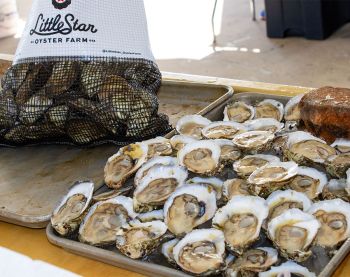
Round out your Ocracoke cultural education and learn about the life and history of the local Ocracoke waterman. Taste the nostalgia of the old-time fishing village by visiting the Watermen’s Exhibit and Education Site at the Community Square docks in the old Jackie Willis Store and Fish House where the mailboat Aleta used to dock. This historic building by itself is an enduring piece of Ocracoke history and a great location for the project. The Watermen’s Exhibit, funded by a grant to the Ocracoke Foundation, has hands-on activities and classes that will focus on wildlife, fishing and the environment. You will see an oyster exhibit, a model of a pound net, a sink box and other interesting displays and books about being a waterman. Vintage photos, decoys and antique fishing tools will also be on display. While you are there sit on the porch and enjoy the scenic view of the Ocracoke Lighthouse across the Silver Lake Harbor.
Portsmouth Island
- Ocracoke
Portsmouth Island, just across the inlet from Ocracoke Island, is an enchanting place to visit. This uninhabited island is rugged and remote, one of the last Atlantic coast islands that is free of development, thanks to its status as part of the Cape Lookout National Seashore. There is much to do on this island, all of it free and simple, filled with history and the allure of the natural world.
On the north end of the island is a veritable ghost town known as Portsmouth Village. The village was once one of the largest settlements on the Outer Banks, though no one lives there now, save a caretaker. Portsmouth Village was established in 1753 on the shores of Ocracoke Inlet, and it was predominantly a “lightering” village. Large ships that used Ocracoke Inlet as a major trade route to the mainland would have to be unloaded to pass through the inlet and the shallow sounds and then reloaded as they found deeper waters. The residents of Portsmouth Village did the lightering of the load by moving goods to several smaller flatboats and then reloading the ships a ways down the water. A large community sprang up around this business, with a post office, a church, a school and many homes.
In 1846 Hatteras Inlet opened in a hurricane and was deeper and safer than Ocracoke Inlet. The shipping route shifted to the north, and the Portsmouth villagers had to find other ways to make a living. Later, during the Civil War, many islanders fled to the mainland to avoid advancing Union troops and never came back after the war. Portsmouth Village’s population continued to decline until there were only three residents left in 1970. In 1971, one of them died and the other two left the island reluctantly. In 1976 Portsmouth Village was saved when Cape Lookout National Seashore was established. The village is now on the National Register of Historic Places.
Many of the buildings have been restored, and visitors can enter the church, Coast Guard station, school house and post office for a peek at old island life. The interiors look as if the people have just left, and you can look into the windows of some old buildings and see the villagers’ former belongings. There is also a visitor center in a restored house where you’ll find restrooms and exhibits on the island’s history. You can walk from the village to the beach, though it is a long walk so be prepared. The beach at Portsmouth Island is expansive and clean, and the shelling is outstanding.
Conveniences are few on Portsmouth Island. Restrooms are available, but drinking water and food are not. Bring your own, plus sunscreen and insect repellent. The mosquitoes are voracious on Portsmouth Island. The island is only accessible by boat. See Recreation for information on Portsmouth Island ferry services and boat rentals.
Springer’s Point
- 100 Loop Road
- Ocracoke
Springer’s Point covers about 90 acres of maritime forest bordering Pamlico Sound near South Point. In 2002 after 10 years of research and negotiation, the North Carolina Coastal Land Trust purchased a 31-acre tract of this land and established a nature preserve. A high point of land overlooking the inlet, Springer’s is believed to be the site of the earliest settlements on the island. Supposedly Blackbeard, whose real name was Edward Teach, met up with some fellow pirates here shortly before his 1718 death for several days of rum drinking, a pig roast, bonfires and music. He was discovered at his hangout in November and beheaded in a bloody battle. The deep hole just off the point is a popular fishing spot and still called “Teach’s Hole.”
Today the preserve is available for more serene pleasures. A half-mile stroll along the groomed trail takes you among the gnarled and ancient live oaks and maritime evergreen forest to the water’s edge, where a rookery of heron, egret and ibises can be spotted to the east. Along the trail visitors will see an old well, all that is left of a former home site. You should also take time to notice the amazing fences made of natural wood and vines. The inimitable Sam Jones, who once owned the property, is buried here, next to his horse.
Parking is not available, and you must walk or bike to access the property. Donations supporting maritime forest restoration can be made at the Ocracoke Preservation Society.